A paraprofessional (or student attendant) complains today that the child is not cooperative in academic work. Even though this child is not on my caseload, I get to brainstorm how to better support this child and make some suggestions to her.
First of all, as a behavior analyst, I had to ask how often this behavior occurs? How much work does she complete throughout the day? Also, if this child has an IEP (individualized education plan) which indicates that he or she needs adequate support and accommodation in order to access school work along with targeted goals, do you provide that support?
Next, is it something that this child can do, but won’t do? Otherwise, it may be too difficult for this child to handle.
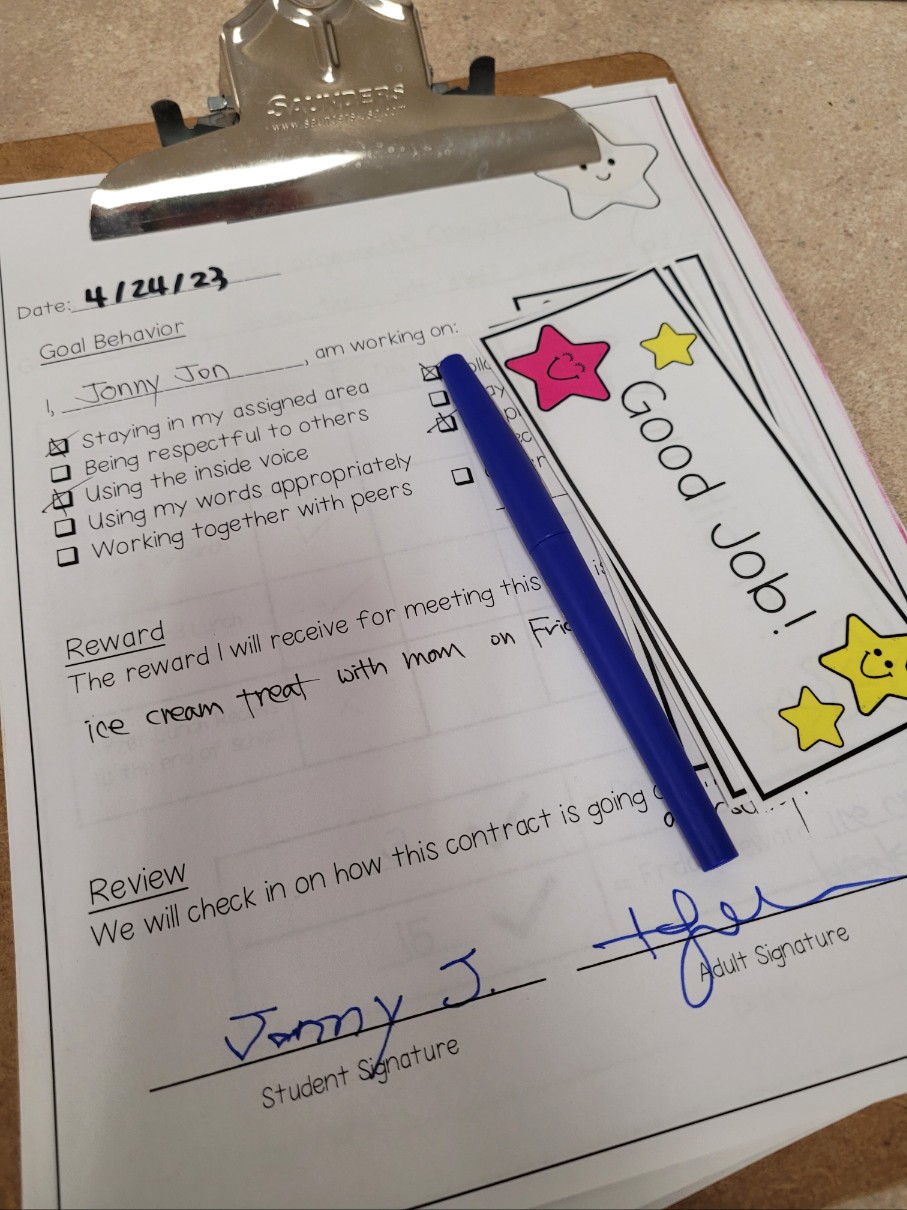
One of the behavior strategies that I suggested was to use a behavior contract.
Student motivation is often the main obstacle to improving their behavior, and addressing it can be a simple solution. By providing the appropriate incentive, we can enhance a broad spectrum of behaviors, but only if we utilize the incentive effectively.
The implementation of behavior contracts can enable us to utilize incentives effectively, thus maximizing student motivation to enhance their behavior. As a busy teacher, using a contract to explicitly outline the desired student behavior and the consequent rewards is a potent and pragmatic intervention. The availability of readily available behavior contract templates further simplifies the process.

A sample behavior contract typically includes the following components:
- Introduction: This section introduces the purpose and scope of the contract, identifies the parties involved, and outlines the specific behavior or behaviors that the contract addresses.
- Goals: This section outlines the goals and objectives that the parties hope to achieve through the behavior contract, such as improving academic performance, reducing disruptive behaviors, or promoting positive social skills.
- Behaviors: This section describes the specific behaviors that the parties agree to work on, including any desired changes in behavior or performance.
- Consequences: This section outlines the consequences that will occur if the agreed-upon behaviors are not met. Consequences may include loss of privileges, additional work, or other disciplinary measures.
- Rewards: This section identifies the rewards or incentives that will be provided if the agreed-upon behaviors are met. Rewards may include positive reinforcement, recognition, or other incentives.
- Signatures: This section includes signatures from all parties involved in the contract, indicating their agreement to the terms and conditions outlined in the document.
Overall, a behavior contract is a useful tool for promoting positive behavior change and accountability. By clearly outlining expectations, consequences, and rewards, it can help individuals achieve their goals and work towards positive outcomes.





 Everyday Teaching Autism Resources
Leave a comment