What is Task Analysis in ABA?
A task analysis is a teaching process that breaks down complicated activities or skills into small chunks involving easier steps for the learners to more easily take.
Which setting is Task Analysis used mostly?
Regardless of what your role is in the setting, understanding the concepts and implementations of the task analysis is very useful to teach and learn new skills. As the field of ABA grows and disseminates its core behavior principles outside the clinic settings, many school settings including special education programs and adult programs where people spend quite a deal of time learning vocational skills, daily living, and independence skills are starting to look into this behavior technology to better support their learners.
How do you begin?
It always starts with the question: What skills are you trying to teach or learn?
This guiding question is the ultimate goal for the certain program. For example, I want to teach my middle school learner how to use a vending machine to buy a snack. That is your target skill to teach, and we should start breaking down this behavior into small steps to get to the final behavior. 1. locate the vending machine 2. scan what is available 3. gather coins or bills to match the price…..
More examples of the use of Task Analysis (TA)
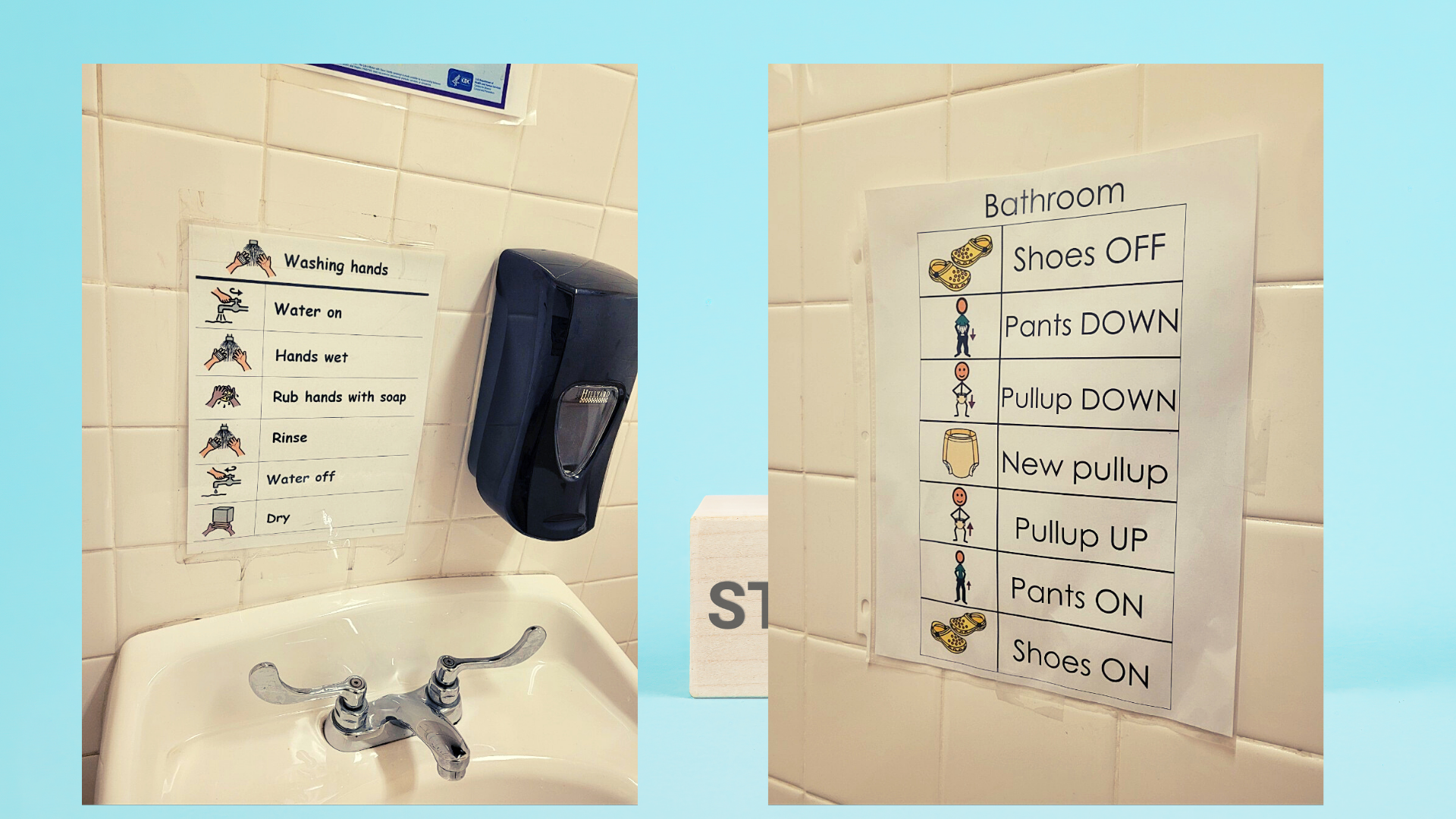
Have you told your young learners to “wash hands” in the bathroom and felt frustrated about how they did? Educators and parents have to consider first that even this simple behavior (hand washing) actually involves many steps to complete.
What about using a restroom? Read my post: ABA and Potty Training.
I have created this simple PowerPoint slide deck recently to teach my students to go to the cafeteria to pick up their lunch. It is critical for staff to understand the whole scope of skills they need to accomplish the “picking up lunch routine” and teach any steps our learners seem struggling with.





 Everyday Teaching Autism Resources
Leave a comment