It has been a tough couple of months with new students with limited communication and social skills since the beginning of the school year. Some also display wandering behavior. I work with students with autism in public school settings, and wandering or eloping behavior is one of the most challenging behavior to work with. Maintaining a safe learning environment is critical to any special education teacher like me.
Eloping behavior and autism
It is widely known that many children with autism may wander or elope because they have low safety awareness. They may get stuck on something interesting like birds, cars, or even toilets. Whatever fascinates them!

There is also a group who try to leave uncomfortable situations that make them anxious. It is to escape from the source of anxiety or overwhelming sensory experiences such as loud noises or fast movements of others.
Before considering asking for help from a professional (behavior analyst), there are several things you as a teacher can do immediately.
- Start taking data on the frequency of this wandering or eloping behavior throughout the day. Simple tally marks will work as long as the datasheet includes the breakdowns of time. A Scatter plot datasheet would eventually indicate which time frame of the day this behavior mostly occurs.
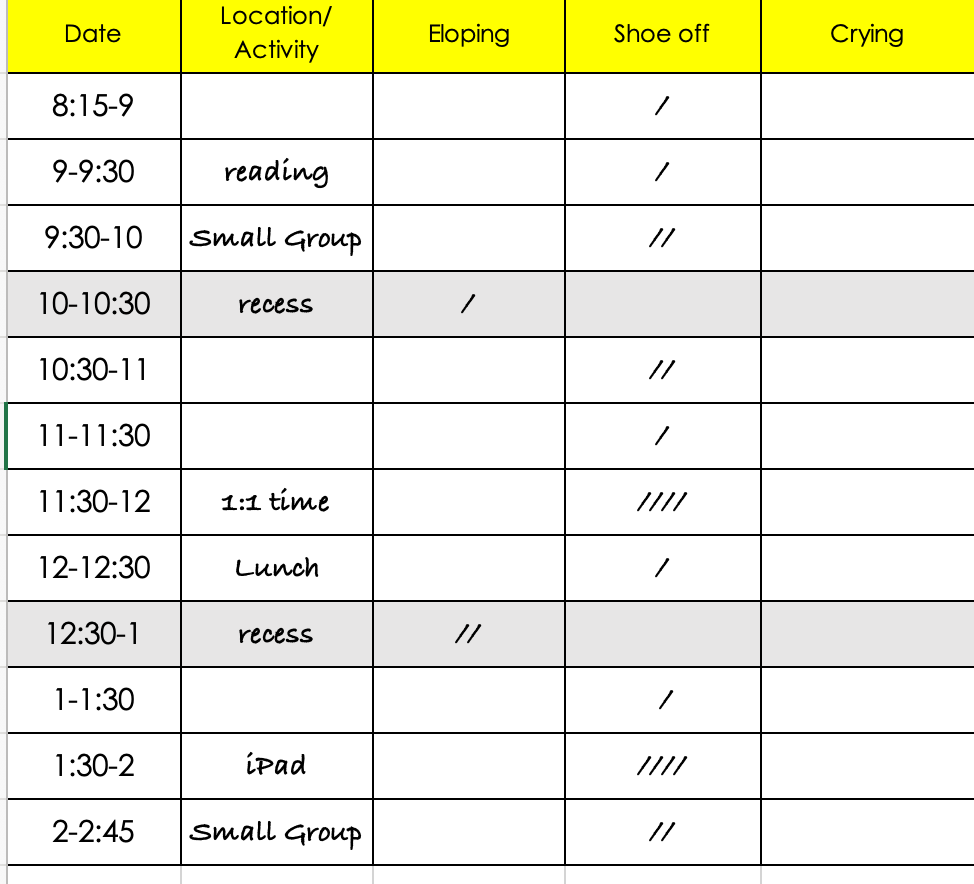
2. Once you have noticed the pattern of this particular behavior while analyzing the scatter plot datasheets, you can come up with preventative strategies. This information may suggest some possible sources of reinforcement. The function of this behavior.
Why does he do that? What reinforces this eloping behavior? Is it to escape from something? Then, what does he try to escape?
3. Let’s come up with preventative strategies. What can be done to prevent this behavior to occur again? These strategies should tightly rely on the possible function of this behavior. If you are trying to teach him alternative behavior, consider it should be functionally equivalent.
4. Once you arrived with some plans, get together with your para-professionals and other service providers to discuss and share your plan. Only a consistent plan will lead to successful behavior changes.
5. Continue monitoring the frequency and intensity of behavior using an ABC chart and scatter plot. Adjust your plan accordingly based on the data.

Read more:





 Everyday Teaching Autism Resources
Leave a comment