
Social-emotional learning activities
1. Emotion Meter
Identify your emotion/feelings utilizing the Emotion Meter (thermometer) and match up with appropriate behavior strategies to move around on the meter.
2. What would others think?
How does our behavior impact others’ thinking about us? Use the Behavior Scale Cards to discuss where each behavior goes on the scale.
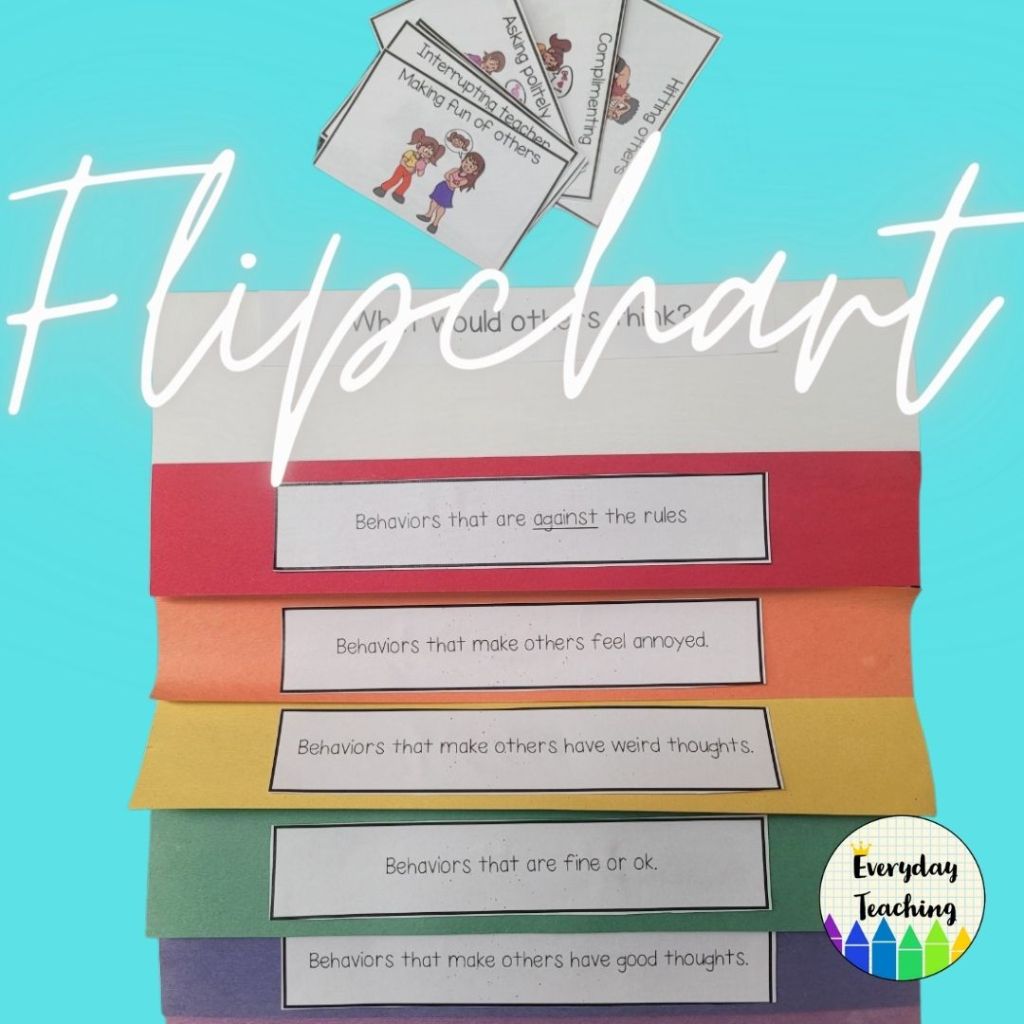
3. Flipchart
Make your own flipchart to identify how others see my behavior and use it as a self-monitoring strategy
Teaching feelings game
For the younger students, start with your lessons by teaching feelings. Labeling different feelings at the moment by modeling, “I feel sad because….” this type of language model will teach them how to express their own feelings and reflect on why they feel in a certain way. We can always add something like…” I hope I feel better soon” or “I might feel better if I ……” This way, students will learn that feelings can change and it’s natural. Also, we can always do something to change our feelings at the moment if we don’t like them.
Social Skills Activity
In our school, we begin each day with a morning meeting. All the students gather on the carpet to greet, share ideas, play games, etc. It lasts about 15-20 minutes each day to set the tone. This is a time when students get to share their own ideas in front of people and also learn empathy while listening to each other. Even in the kindergarten classroom, this way of starting a day seems very productive. These young students learn how to listen to each other, and recognize/her peers as a member of the community. This is crucial as they grow up instead of opposing or criticizing different ideas and opinions, they have to practice listening and sharing their own thoughts in the most positive way. Morning meeting is such a critical routine in the elementary school classroom.
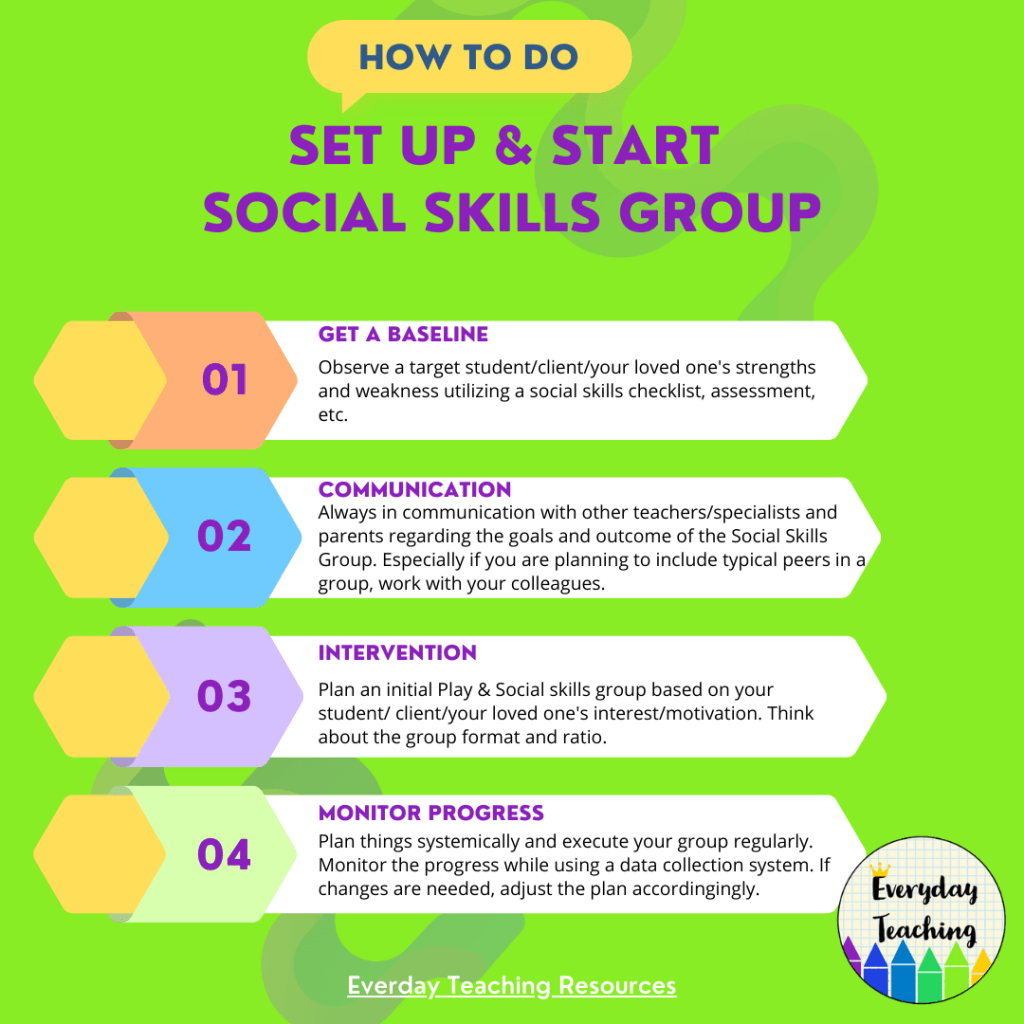
If you are looking for social skills group ideas for young students with autism, these are 4 steps to take. Always start with getting a baseline. It can be done through observation or formal/informal assessment. Working with other service providers, teachers and parents is key to success as well. When you start your intervention, start with small components of the large skills in a small structured setting. Continue the progress monitoring utilizing various data collection systems.




 Everyday Teaching Autism Resources
Leave a comment