What assessment do you use in special education classroom? Another topic special educators can talk about for hours is assessment. What do we use to assess students in special education? Especially for those with significant delays in academics, language, and behavior?
What’s ABLLS-R?
ABLLS-R has been my go-to assessment and curriculum guide since the beginning of teaching. The ABLLS – R provides a comprehensive review of 544 skills from 25 skill areas including language, social interaction, self-help, academic, and motor skills that most typically developing children acquire prior to entering primary school.

If you are a special educator teaching primary school, this is a tool for you. If you are parents who have a child with some delays, this will be a great way to determine what skills are missing or weak when preparing your child for entering kindergarten.

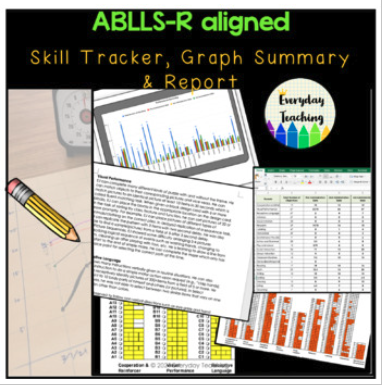
I have worked with a child to complete his 3-year assessment meeting using ABLLS-R recenlly. If you need a sample report and result-reporting tools. Check out this ABLLS-R sample report.
The visual analysis came out pretty good- The more squares are colored, the more skills the student has “supposedly” acquired. Nevertheless, there are some areas this student struggled a lot.. such as the social interaction domain which was left blank for the most part (meaning, not many skills were mastered). After reviewing the report and visual analysis with parents and the team, I wanted it to be easy for parents to understand this…what’s the takeaway from this? so what?
When I researched more about ABLLS-R, I found this report on their website.
This is not a standardized test- but comparing it to the skills tracking grids for each age level can be some way to estimate or measure where my child’s specific skills are.. and which direction is developmentally appropriate to take. This report provides research data on the developmental patterns of specific language and learning skills of typically developing children as measured by WebABLLS/ABLLS-R.
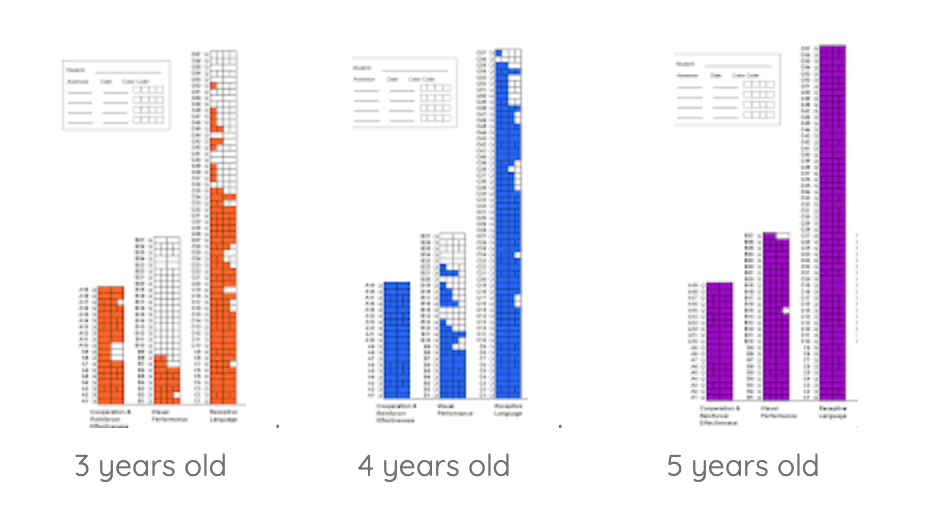
ABLLS-R is a great resource in special education and autism. As a teacher and clinician, it’s never safe to determine a child’s developmental age/level solely based on this result. A child’s growth and development is a complex process and we are not in a position to determine any of these. Please read the report for more information.





 Everyday Teaching Autism Resources
Leave a comment