Many of us enjoy our free time during the weekend without any plans or interruptions. No plans. That’s the beauty of the weekends and the long break.

Granting parents want to stay home relaxing by laying on the couch to watch TV. On the other hand, this might be the hardest thing for many children, adolescents, and adults with developmental disabilities.
One of my client’s parents approached me to discuss ways to teach him (my client) how to kill time/keep himself occupied independently with appropriate leisure activities during the weekend. 🥁 I guess my client has become aggressive a couple of times when his parents don’t grant his request to go outside during the weekend.
When this client of mine ‘acts out’ at home, it is pretty difficult for the parents to manage the situation. He is 25 years old weighing 200 pounds.
I hear similar stories in school settings as well.
On the very last day of school (before the summer break), a teacher wanted to use some time cleaning up the class, and wrapping up the school year- but it was equally hard to occupy her students with free time while she packed up her stuff. Then, you may encounter some behavior episodes that you didn’t expect.
Autism Behavior Strategies
My suggestion is to structure your unstructured times. The end goal is for our students/clients/loved ones to find something meaningful to enjoy their free time just like everyone else. However, we may have to put in some structure with visuals in the beginning stage. This is a skill to teach and learn. Do not assume everyone on the planet loves unstructured free time.
Schedule
Create a schedule board or just write on the whiteboard in your living room. We can prompt them to engage in specific activities for a specific amount of time (e.g., watching TV for 20 minutes, folding laundry, taking a bath, and going for a walk) using a visual schedule.
In teaching this behavior expectation,
- Have a client or child make a choice of leisure activity
- Start with 5 minutes in the presence of a time timer. This may increase over time as he/she gets better.
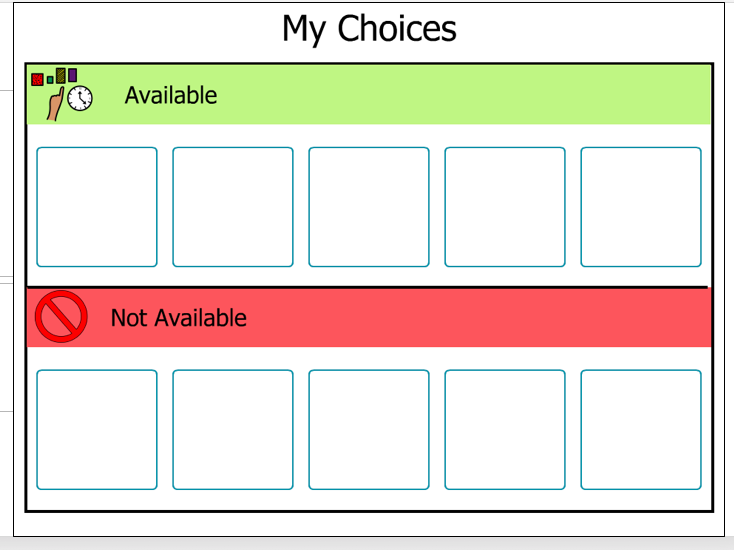
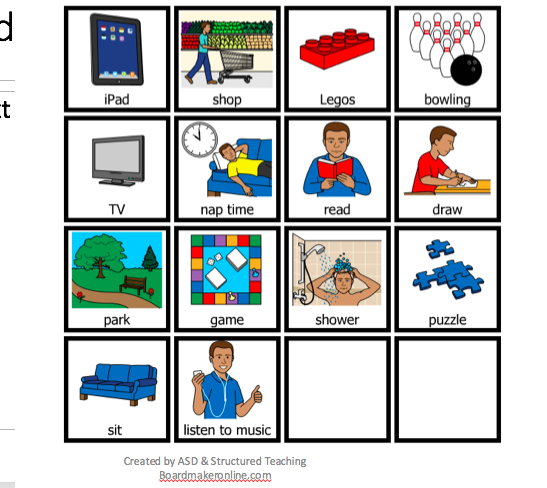
What’s available Choice Board
Create a board or just write on the whiteboard in your living room. What’s available and What’s not.
Making this choice board together is a key- explaining what the family can do together this weekend and what’s not an option because of the weather, etc.
Social Narratives
Reading a social narrative can be useful to help the client engage in socially appropriate behavior during unstructured free time.
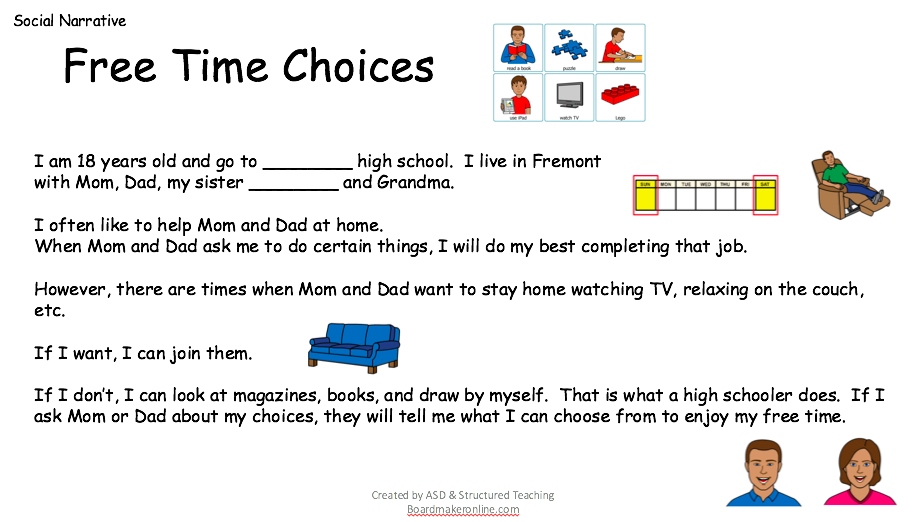
When writing a social story, I write from his/her perspective using “I” or “actual name”. Always think about the alternative behavior we want to teach in lieu of the inappropriate behavior. Staying with a positive tone in the story helps to develop language in the environment as well-
“Respect personal space by keeping your hands to yourself” instead of “don’t hit others”.




 Everyday Teaching Autism Resources
Leave a comment