Let’s take one of my student’ curriculum cart, pick a drawer labeled “Reading” and see what’s in there.
Okay. Jonny has been working on reading sight words, and building phonetic skills lately. Here are a couple of materials he has been using.
Sight Word Cards

Common Nouns and Verbs

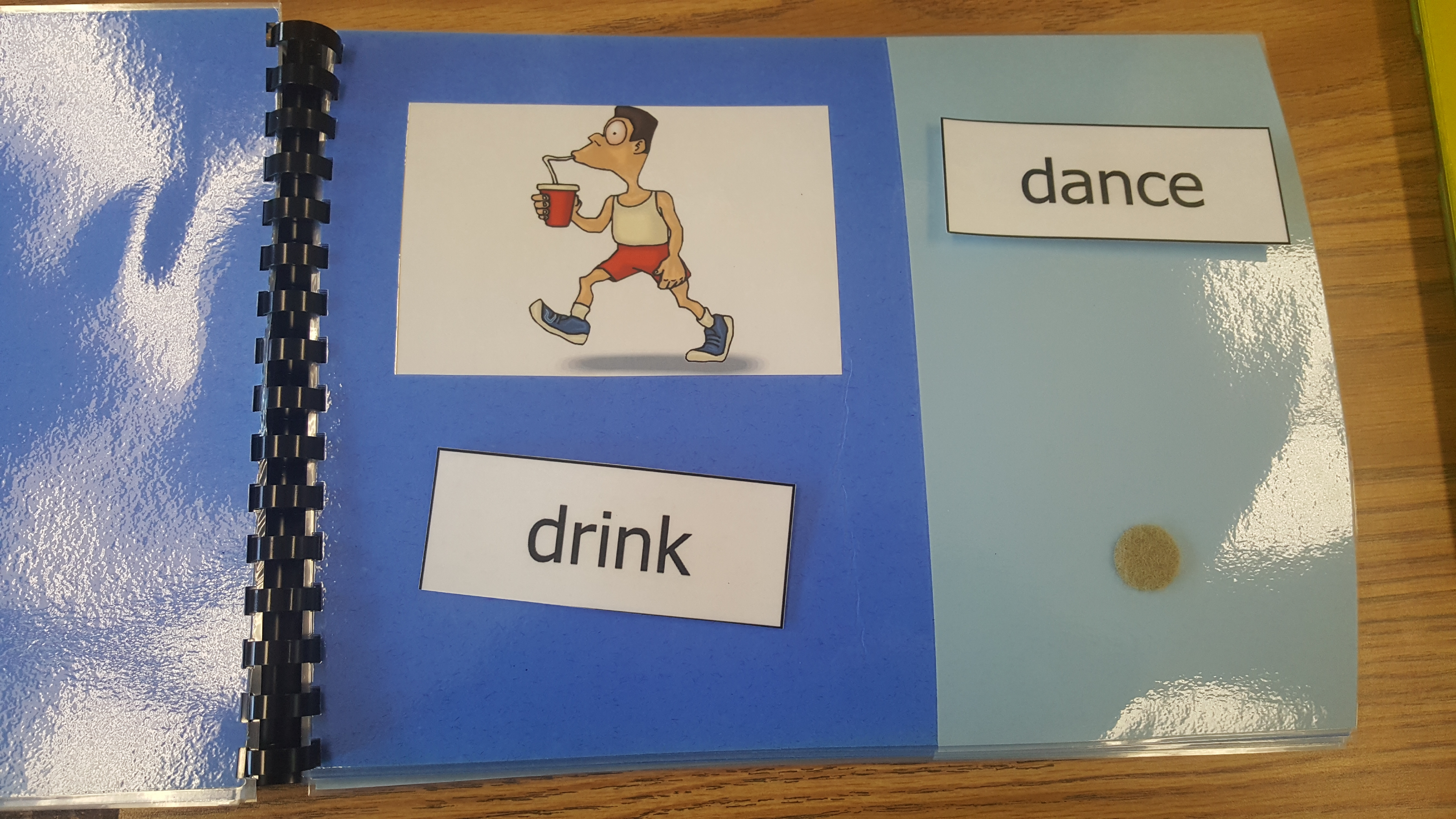
Simple Decodable Books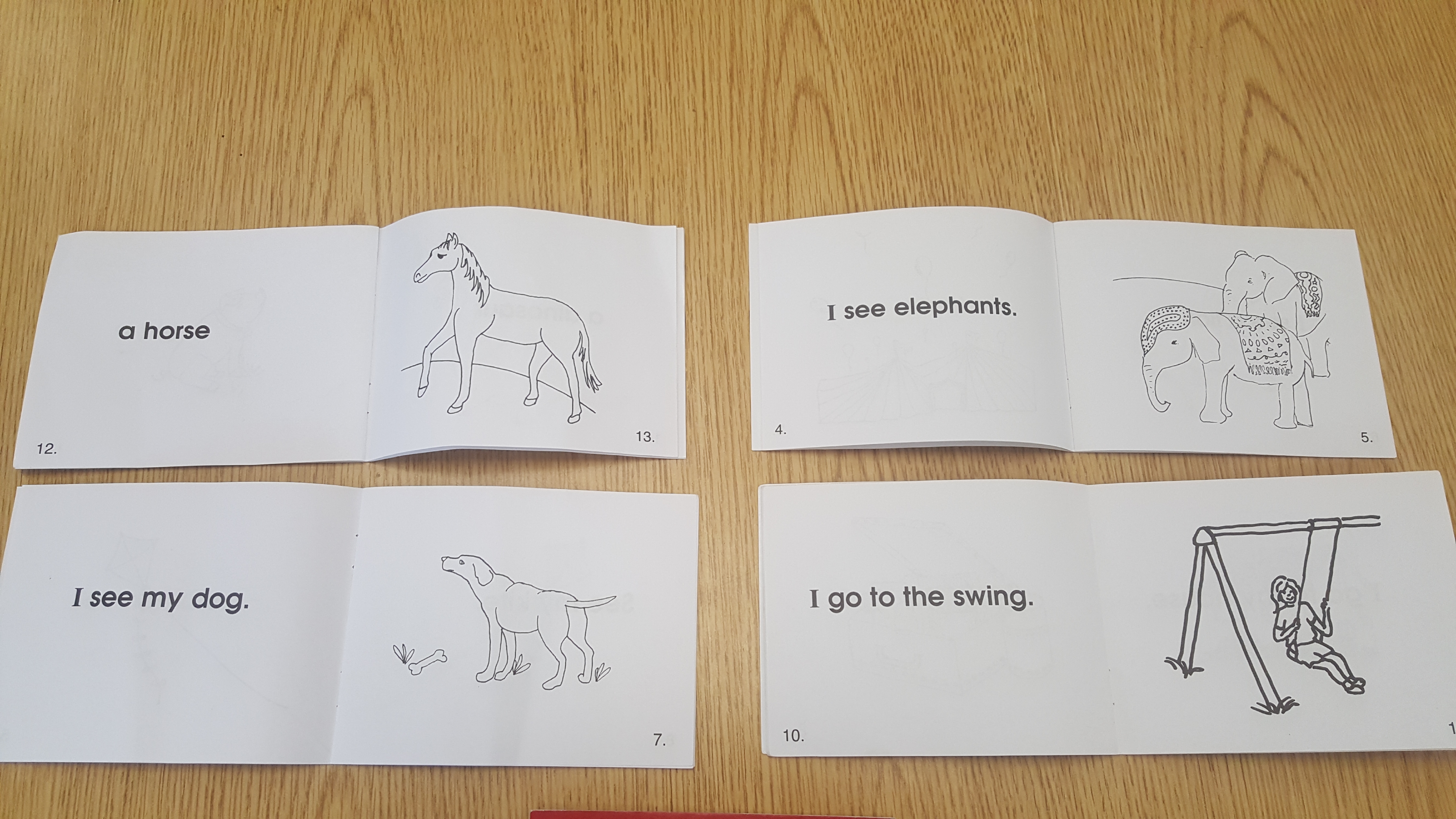
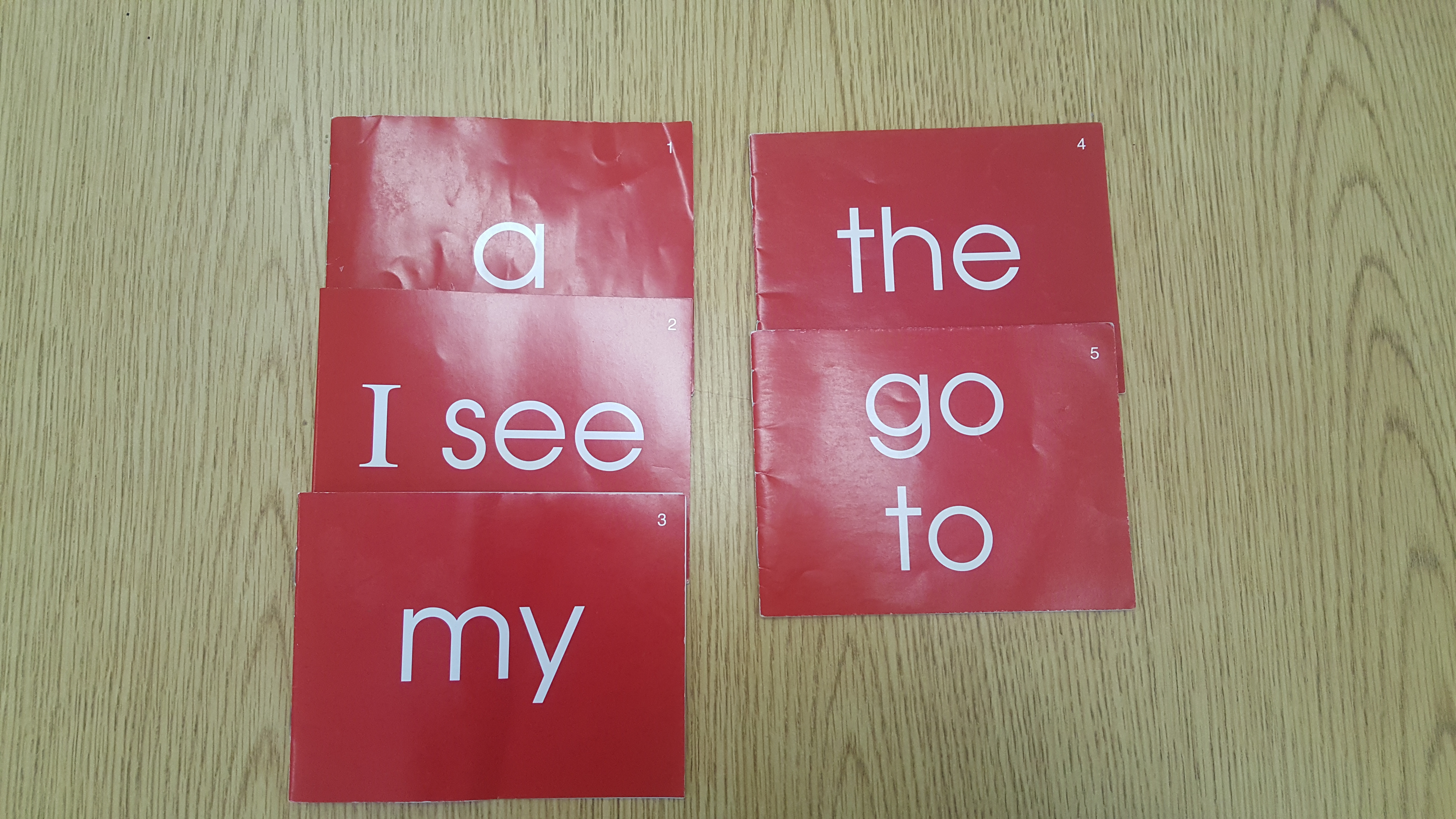
 My experience with Jonny was mind-blowing. He first came to me with 5 sec of attention span. He got a fleeting attention and he would only respond to heavily sensory based activities like a swing, sand box, and playdoh. Hardly ever settled at his chair and desk.
However, my mission was teaching him to read. He had to learn how to read his schedule words and names of favorite things to play with. We had to skip a couple of steps here and there. Steps like… “What letter is this? Is this A?”, “what starts with B?” and such a thing. We tried so called traditional way of teaching to read for 6 months- and not much progress.
After months of consistent routine of reading instruction, he is able to sit at his desk and read through those red books. He takes prompts if needed, however, great improvement in engagement.
What I learned from Jonny’s case was that it is okay to use many different reading materials or approach to teach basic reading skills. Outcome may vary depending upon the each child’s learning style and skill level. It is okay to be flexible.
Literacy is generally defined by researchers and authors (e.g. Browder & Spooner, 2006) as learning and sharing information with others. This includes listening and speaking, as well as reading, writing, and spelling (Downing, 2005).
Teaching Emergent Literacy Skills to Students with Autism (it’s very useful article)




 Everyday Teaching Autism Resources
Leave a comment