Special education summer school is previous time for our students to continue working on their IEP goals and reinforce good working habits during the school year. In the past, I have always taught summer school(or Extended School Year) at the same site where I taught the regular school year, which was super convenient. However, things were different in this school district. It is very different when teaching a group of students with autism at a very different skill range in a totally new and unfamiliar settings, like a fourth grade general education classroom. To begin with, I had to prioritize what needed to be done in order to have a successful first day, and then add more detailed structures as it goes.
How to Set-up Special Education Summer School
- Visuals
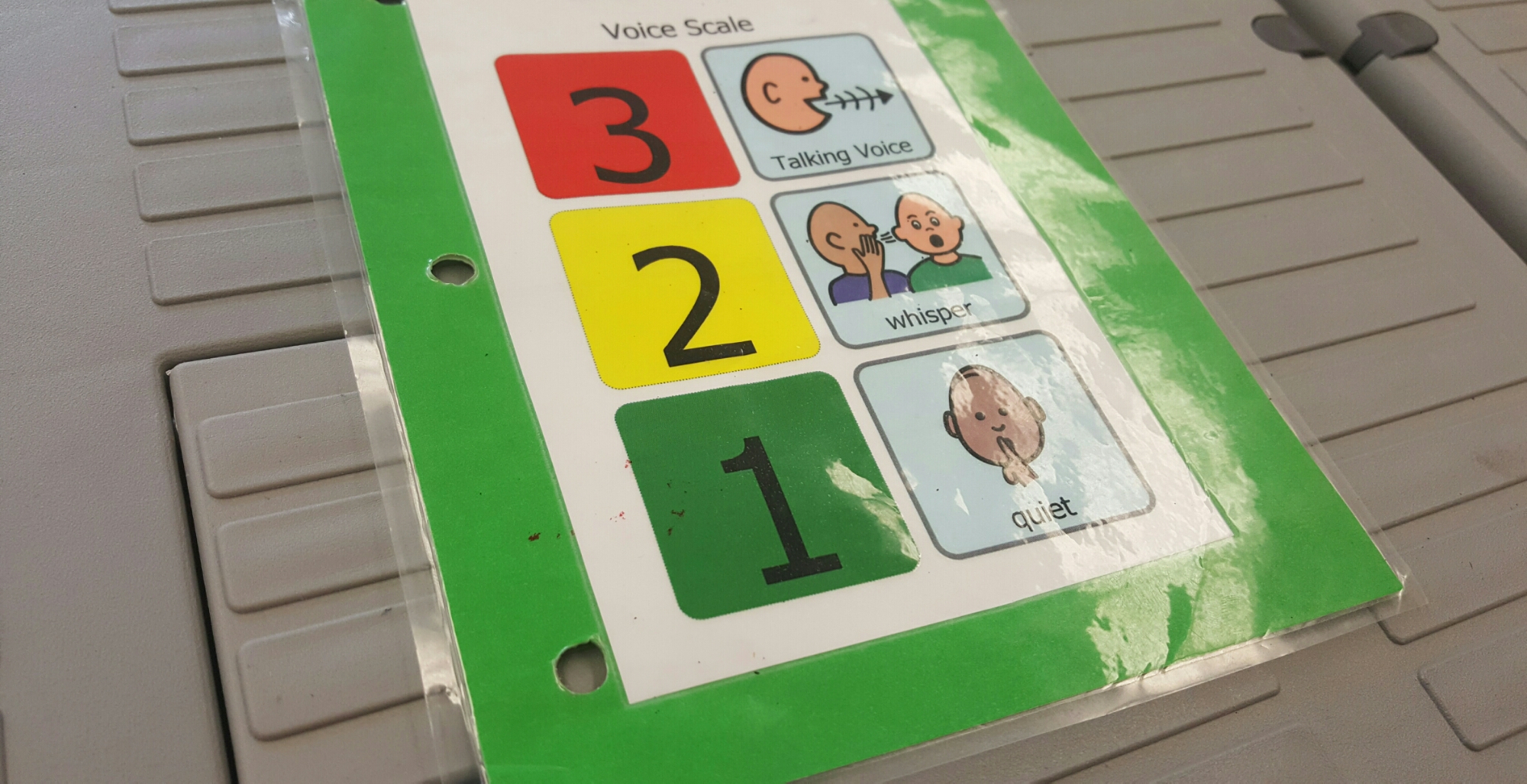
As my kids get to join in general ed. PE every day, I needed all my visuals ready. First/Then, Voice Scale, Yes/No, Wait, etc.
2. Curriculum Cart
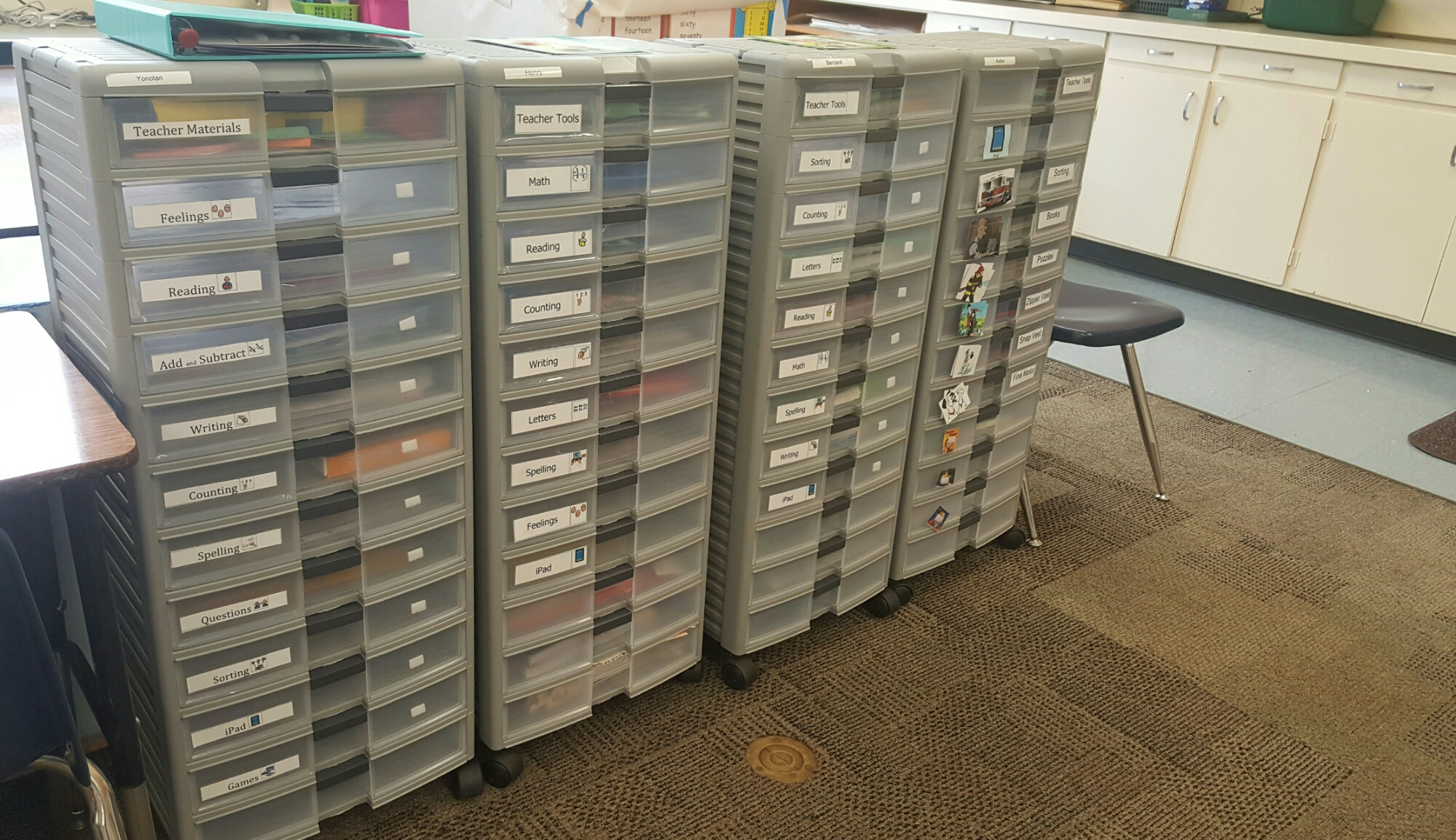
I didn’t forget to bring an individual cart of my students- to assess/practice current level of functional skills as well as to modify some of work materials.
3. Writing/Cutting tools
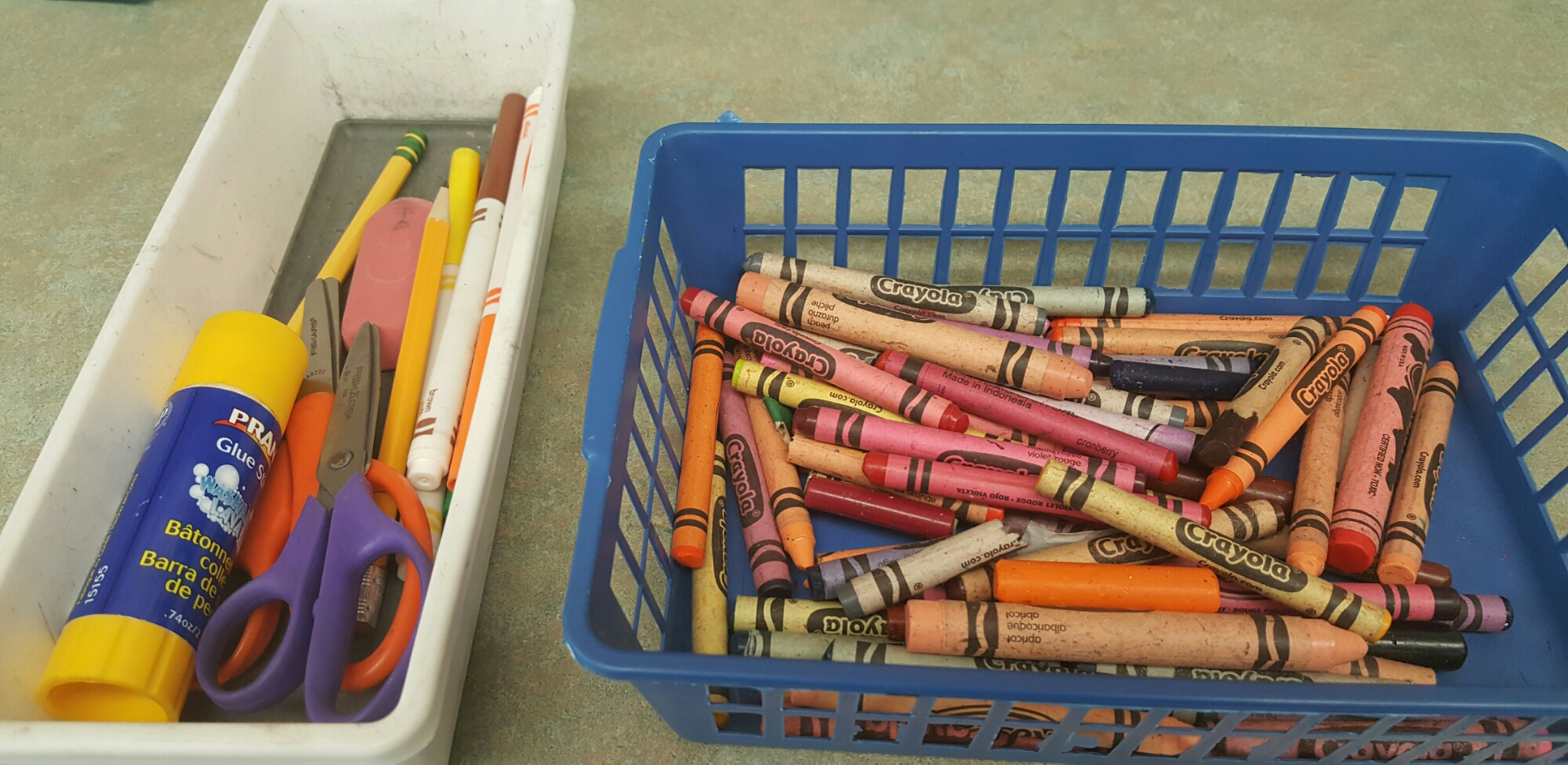
This rectangular box has everything for me to use in order to assess each student’s current level of fine motor skills and functional academics.
- ID names of colors
- ID names of different writing utensils
- ID names of different classroom supplies
- cut straight/curve/zig-zag lines
- trace letters/lines
- write names/sight words
- follow simple directions, E.g., cut and paste
- follow 1 or 2-step directions, e.g., finish coloring and put these in the trash can.
4. Simple routine-based literacy project: ABC book
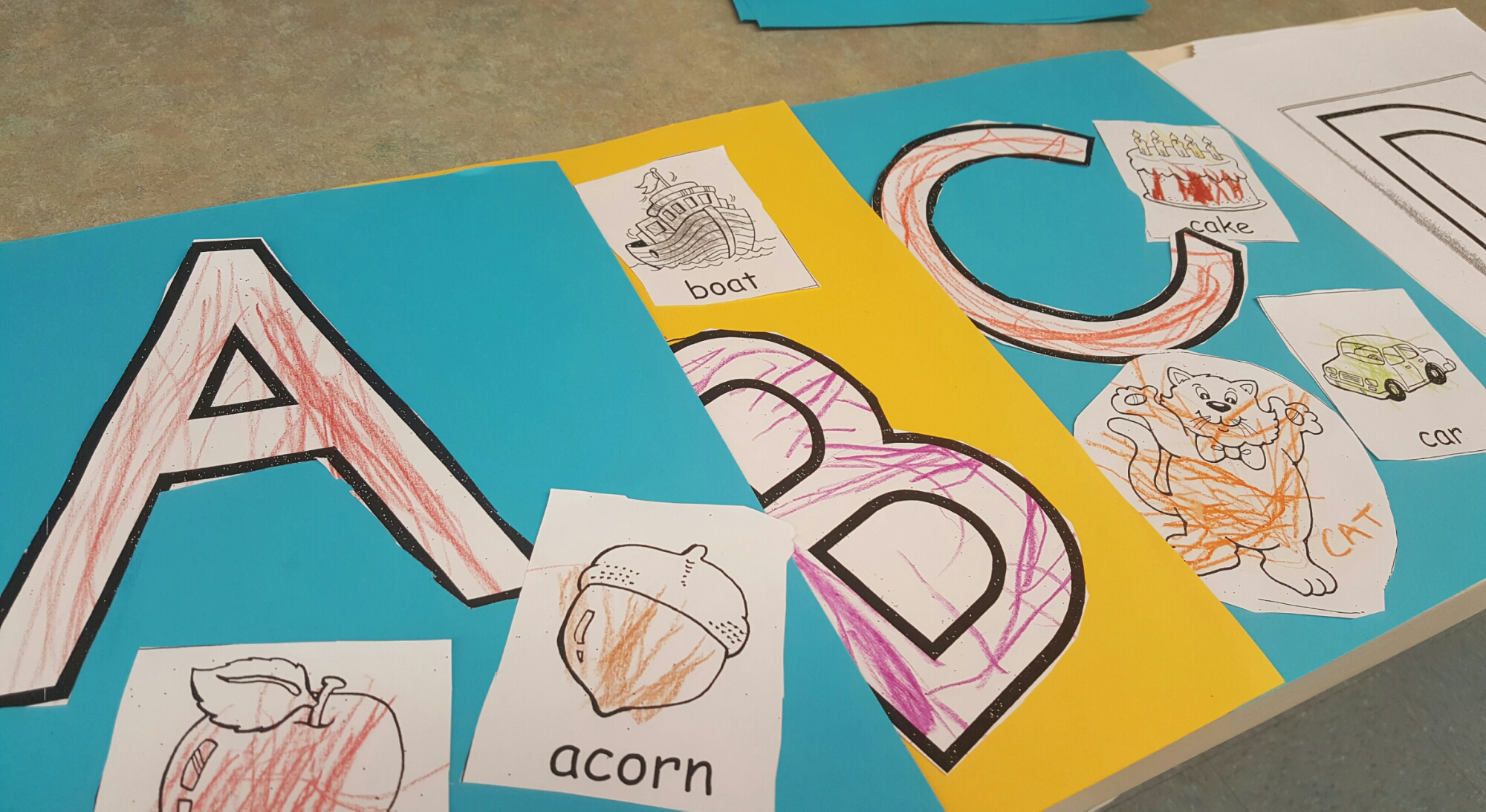
This project should include steps of coloring, cutting, pasting, coloring, and cleaning up. It should be a simple project, and that’s why students can attend comfortably and independently.
5. Smartboard Activity
I can’t think of ESY without music and/or some fun computer time! Every day we get to sit at the table as a group, taking turns to answer calendar questions, and make choices for the different music and movement. Well…who doesn’t like listening to music. The ground rule is for them to wait for their turn, respect each other’s choice, keep their hands to themselves, and follow directions from teachers.

6. Binder Time (Functional Academics)
I usually have great support in these 4 weeks…Yes, I felt fortunate that all 7 of my kids get to have some 1:1 instructions at some point a day. I have created a binder with some worksheets that students get to work on with adult staff- math, reading, cognition development, etc. If possible, the targets can align with their IEP goals even though ESY doesn’t have to heavily focus on IEP goals. I always like to start the 1:1 session with a couple of simple puzzles as a warm-up. Remember to present more mastered(known) tasks vs. target skills to make a positive learning environment and prevent behavior outbursts.

7. Morning meeting/ Closing meeting (Group activity)
As soon as kids get to school, I see them in the group. I want them to know what’s today, what’s expected for the day, who’s here, and most importantly we are here to have fun! I bring many different kinds of fun activities normally, e.g., spinning on the chair, bouncing on the ball, feelings, flying balloons, etc.

8. Schedules
I have a master schedule in my group area. See above. That’s for both kids and my staff.
And….my kids have their own schedules too. Some of them have PE at different times of the day…and the same with speech and OT pullouts. Each kid gets to see what’s his or her day like by having his own schedule. A kid who always asks for home, I simply direct him to his schedule. First speech and then go home…no struggle between me and you… Your schedule says so!





 Everyday Teaching Autism Resources
Leave a comment